


.webp)
Just a few years ago, developers were still debating whether AI even belonged in software engineering. Today, the conversation has shifted completely: how deeply should we integrate AI, where does it bring the most value, and where do we still rely on human expertise to lead the way? At Etnetera Flow, we see AI-assisted development as the natural next step in the evolution of software creation. It can save valuable resources, is more cost-effective for clients, and when used well it can even improve code quality and long-term maintainability.
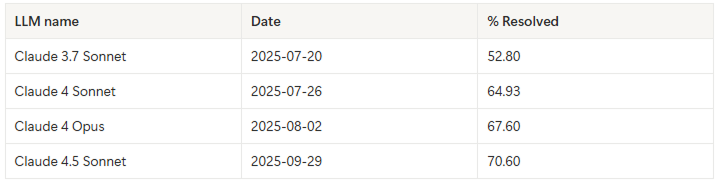
AI’s progress has been faster and more dramatic than anything we’ve seen in recent tech history. Models are becoming more capable not year by year, but month by month. One striking example is Anthropic’s breakthrough performance of Claude on the SWE-bench benchmark, demonstrating how quickly AI is advancing in its ability to tackle real-world software engineering tasks.
SWE-bench is a leading benchmark for assessing how effectively LLMs solve real-world GitHub issues. Models receive a code repository and an issue description, and must generate a patch that resolves the bug.
AI-assisted development vs. Vibe coding
I can see that those developers who don’t use AI are already falling behind. At Etnetera Flow, we see agentic modes as a natural part of modern software development. We actively integrate AI into our daily work. We seek ways to help us solve complex tasks faster, smarter, and with fewer errors.
When looking at how AI integrates into development, two terms are now emerging – vibe coding and AI-assisted development. Both use AI to produce functional code, yet they belong to different phases of the development process. Let’s take a closer look at both concepts.
AI-Assisted Development
AI-assisted development is an approach where AI generates a significant portion of code based on the given requirements, and developers refine, extend, and review it to ensure it meets all functional, security, and quality standards.
This approach depends primarily on experienced developers who can combine automation with their expertise. The result is a development style that blends the speed and efficiency of AI with human precision, producing sustainable, readable, and well-designed code ready for long-term maintenance.
Vibe coding
Vibe coding is a way of developing software where the developer, instead of manually writing code, describes their requirements to AI using prompts. The AI then generates code or a functional prototype based on those instructions.
This approach makes software creation more accessible even to people with limited technical knowledge. It sounds simple and approachable, yet vibe coding also has its limits. It often lacks proper security practices, struggles with scalability, and its maintainability is questionable.
The approach is great for prototyping, and we sometimes use it for early-stage prototypes or simple one-off projects.
Building a standard for AI guidelines
When we started working with agentic modes, we quickly realized one thing: AI can generate huge volumes of code incredibly fast, but without clear rules, it easily drifts away from the level of quality and sustainability we expect.
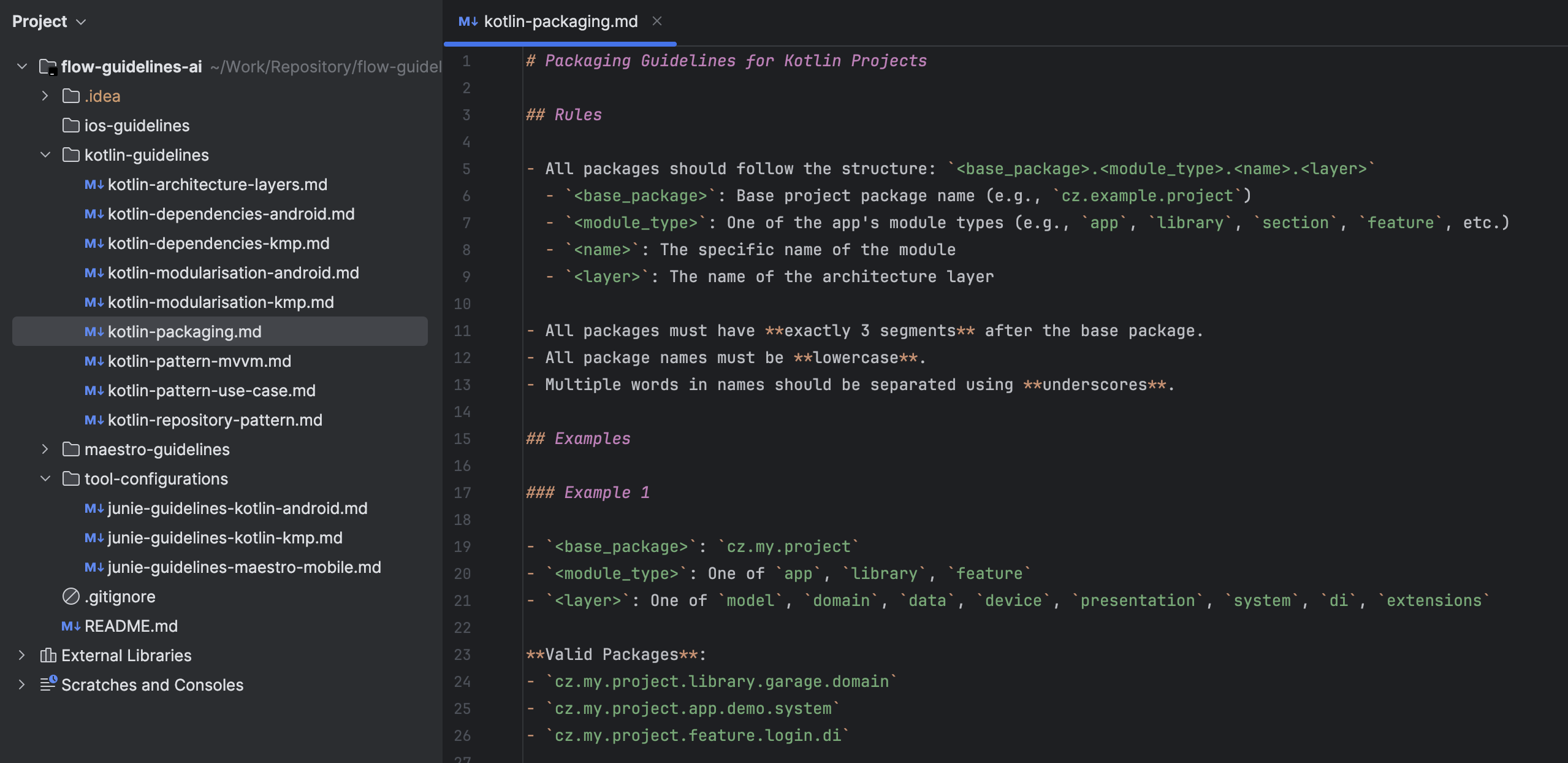
One of the most powerful things AI agents allow us to do is set guidelines (sometimes also called rules). With that, we can bring our long-established development standards directly into AI tools, improving the quality and consistency of generated code.
That’s why we launched the Flow Guidelines for AI project, a solution designed to guide AI agents towards a unified working style and help developers ensure that the output meets our standards.
The project aims to:
- Define general development rules and standards
- Specify individual programming languages (Kotlin, Swift, Maestro, etc.) development rules so they can be reused across platforms
- Create default guideline files for specific AI agents (such as Junie or Cursor)
- Find the right balance in how detailed the configuration files should be
- Enable simple project integration and allow adjustments for each project’s context
Live showcase of AI development
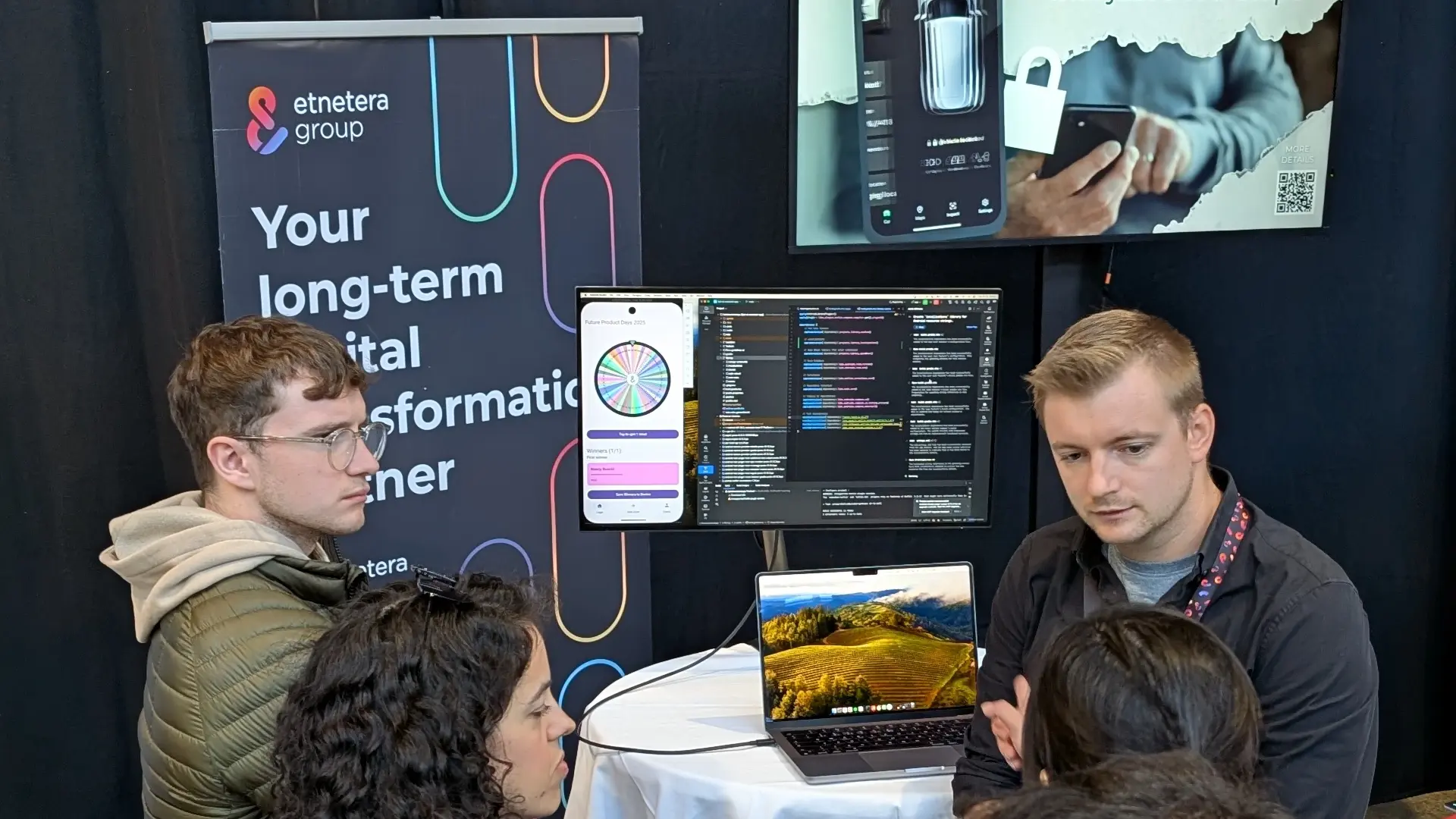
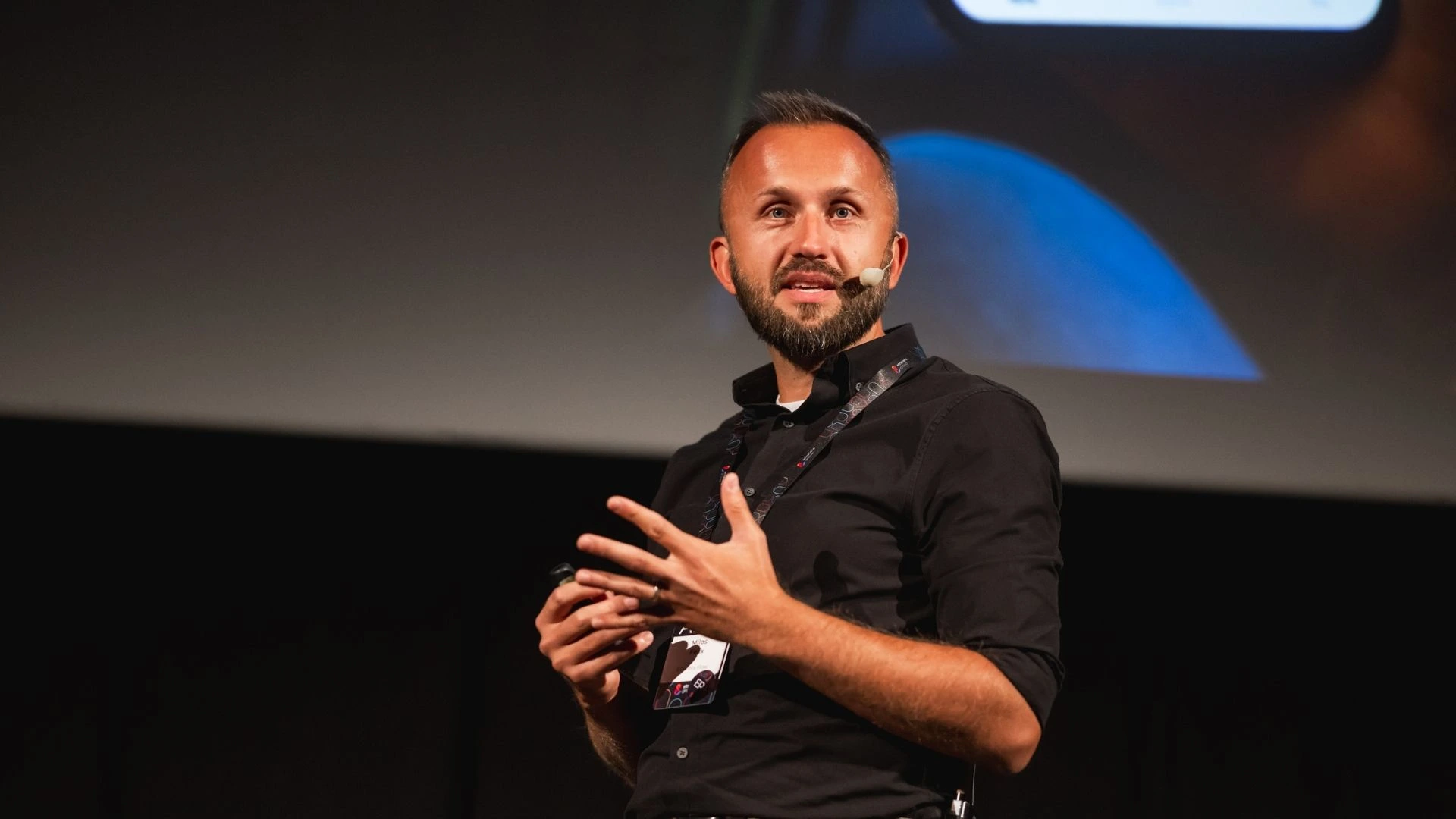
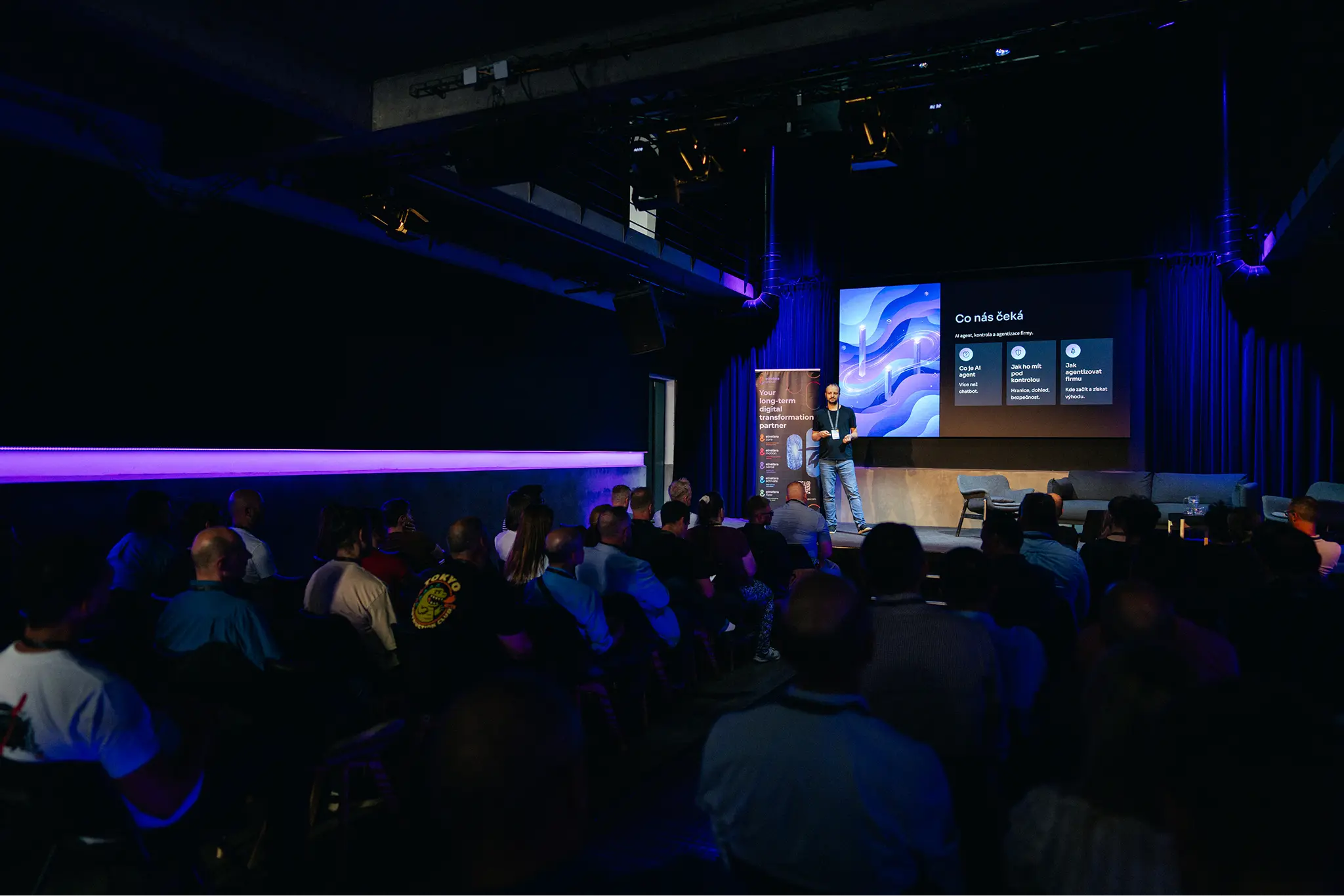
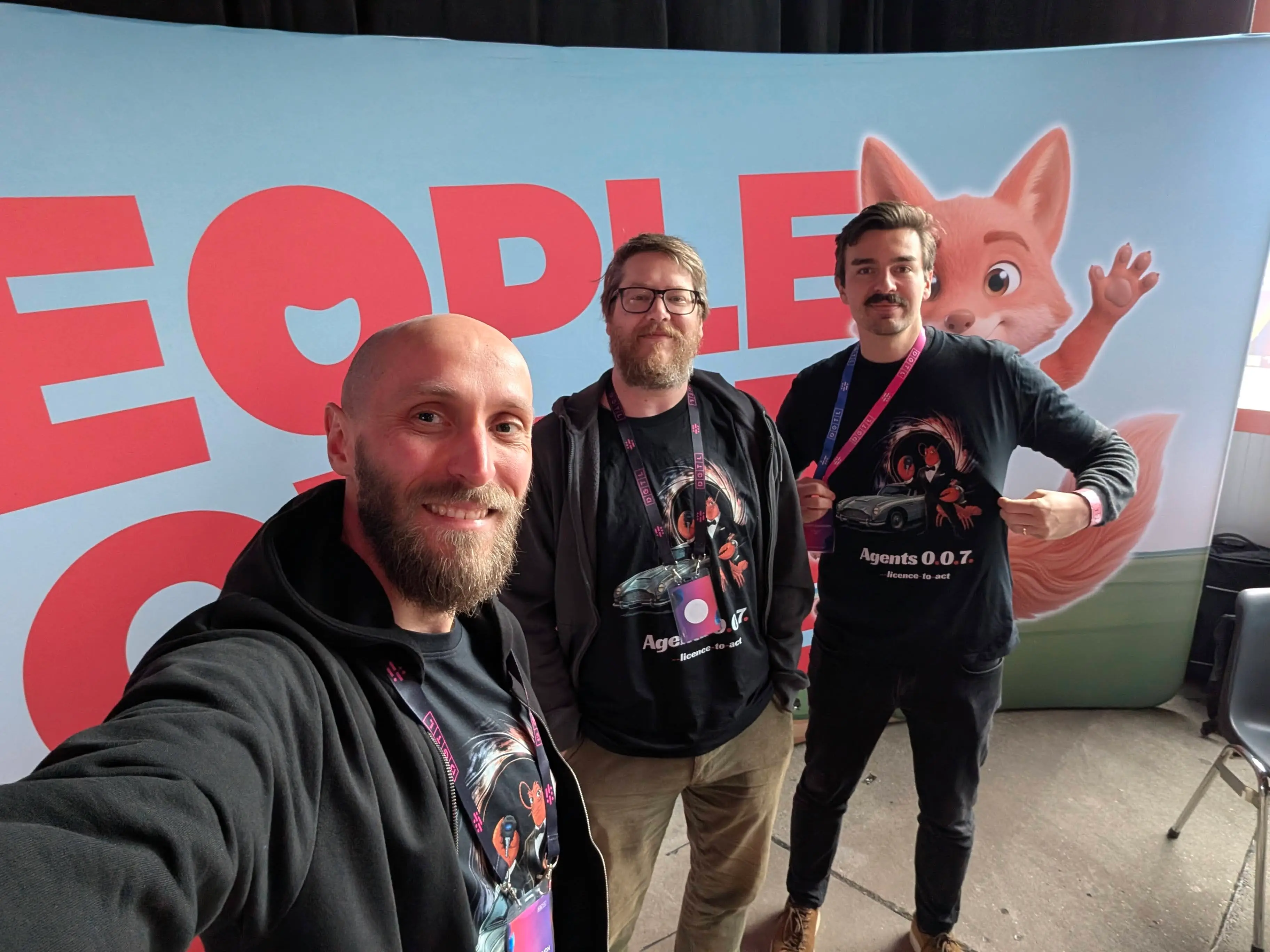
This September, Etnetera Flow exhibited at the Future Product Days conference in Copenhagen. As we had our own booth, we decided to invite visitors and build a mobile app together with them using AI. The app had two main goals:
- Enable visitors to register for our LEGO prize competition and randomly select three winners at the end of the conference.
- Demonstrate how AI agents (in our case, Junie by JetBrains), combined with our development standards and visitors’ ideas, can support the development process while maintaining the level of quality we expect. Of course, in real projects, code review and manual refinement would take more time.
And the best outcome for us? While the AI handled code generation, there was plenty of time to engage with visitors in discussion. Thanks to AI, we can manage multiple things simultaneously, from building to explaining and connecting.
Live at our booth and together with visitors, we managed to develop an application that included:
- A splash screen with an animated transition to the dashboard
- Collapsible UI components describing the competition and prizes
- A registration form for new participants, with data stored in a database
- A list of all registered players, including sorting, filtering, and toggleable visibility of player details
- The ability to select the number of winners (1–3) and a spinning “wheel of fortune” animation
- An animated dialogue window for the main prize winner
- An option to export the winners to a CSV file
- And many other UI/UX improvements

The use of AI in the form of AI-assisted development is setting a new standard for how software is created, one that makes sense to us and shows the future. Especially as we watch how dramatically LLM models have advanced in less than a year.
We place strong emphasis on creating guidelines that reflect our standards and experience. The Flow Guidelines for AI project provides us with a platform to elegantly scale rules for new languages and tools, allowing us to dynamically adapt to emerging trends and innovations in AI.
.webp)
.webp)
.webp)
.webp)
.webp)
.webp)
.webp)


.jpg)
.jpg)
.png)
.avif)

.avif)


